
Tooth extraction
A tooth is taken out when it is too damaged to repair, when it is crowding other teeth, or when a wisdom tooth causes problems. A simple extraction removes a tooth you can see. A surgical one is needed when the tooth is broken off or still under the gum.
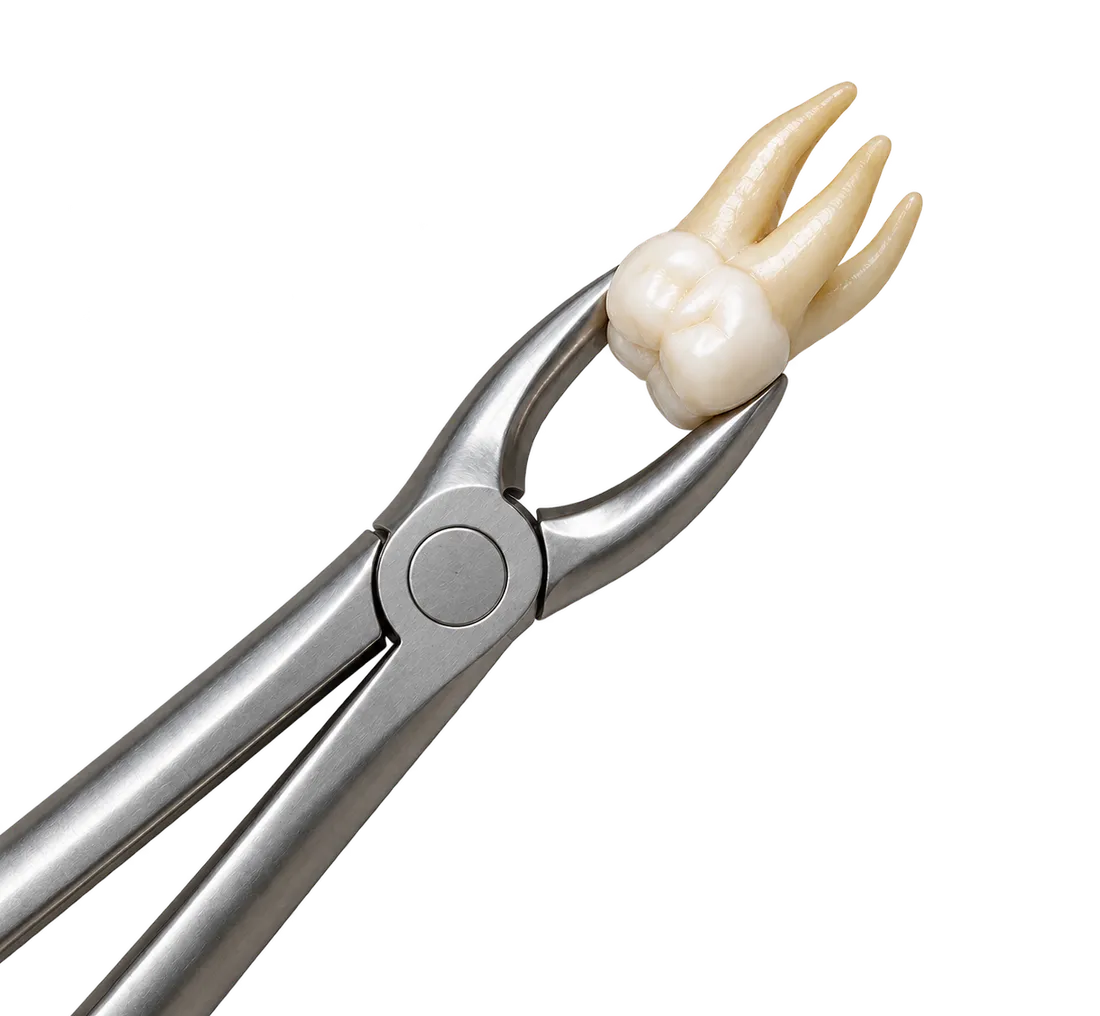
What an extraction is
An extraction removes a tooth from its socket in the jawbone. It is usually done by a general dentist, an oral surgeon or a periodontist (MedlinePlus). There are two kinds.
- Simple extraction. The dentist numbs the area, loosens the tooth with an instrument and lifts it out (MedlinePlus).
- Surgical extraction. Used for teeth that are hard to reach, such as impacted wisdom teeth. The surgeon may open the gum, remove some bone and take the tooth out in pieces. Sedation may be used as well as numbing (MedlinePlus).
Why a tooth may need to come out
Common reasons include (MedlinePlus):
- A deep infection or abscess
- Crowded or badly positioned teeth
- Gum disease that has loosened a tooth
- An injury to the tooth
- A tooth that cannot come in properly, such as an impacted wisdom tooth
Some damaged teeth can be saved with a root canal or a crown. Ask your dentist what the options are before you decide.
What happens
- Health history. Tell the dentist about every medicine you take and any health conditions. Antibiotics are sometimes given before the extraction (MedlinePlus).
- Numbing. The area is numbed. For a surgical extraction, you may also have sedation (MedlinePlus).
- Removal. The tooth is loosened and removed, in one piece or in sections.
- Gauze. The dentist places gauze over the socket and asks you to bite down to stop the bleeding and help a blood clot form (MedlinePlus). Stitches, if used, usually dissolve on their own.
Your lips and cheek may stay numb for a few hours. The socket takes about 1 to 2 weeks to heal, and the bone underneath takes longer (MedlinePlus).
Aftercare
Follow your dentist's instructions. Typical advice includes (MedlinePlus):
- Keep the gauze in place as directed so a clot can form.
- Hold a cold pack on your cheek for 10 to 20 minutes at a time.
- Avoid heavy activity for the first couple of days.
- Do not smoke or use tobacco.
- Do not drink through a straw for at least 24 hours.
- Eat soft foods, chew on the other side, and avoid hard or crunchy foods for about a week.
- Brush and floss your other teeth from the next day, but keep away from the socket for at least 3 days.
- Wait about 3 days before you rinse and spit. Your dentist may suggest gentle salt water rinses.
Risks and side effects
Pain, swelling and some bruising are expected as the numbness wears off. Problems are uncommon, but they include infection, nerve damage, damage to nearby teeth or fillings, reactions to medicines, and slow healing (MedlinePlus).
Dry socket happens when the blood clot is lost or does not form well, leaving the bone exposed (MedlinePlus). Severe pain usually starts 1 to 3 days after the extraction and can spread to the ear, eye, temple or neck. Smoking, a difficult extraction, poor mouth care, using a straw and spitting hard all raise the risk (MedlinePlus). The dentist cleans the socket and places a medicated dressing (ADA).
Bone medicines. Some medicines for osteoporosis or cancer are linked to a rare jaw problem called medication-related osteonecrosis of the jaw. For people taking osteoporosis medicines, an ADA expert panel put the risk at about 0.10% and found that the benefits of the medicine outweigh this low risk (ADA). Tell your dentist if you take these medicines. Do not stop a medicine without talking to the doctor who prescribed it.
Call your dentist if you have a fever or chills, severe swelling, pus, heavy bleeding or pain several hours later, or pain that gets worse days later. Get urgent help for trouble swallowing, shortness of breath or chest pain (MedlinePlus).
Replacing the tooth
Ask your dentist whether the gap needs to be filled, and how it could affect your bite and the teeth around it. Options include a dental implant, a bridge or a denture. An immediate denture can go in on the day teeth are removed (ADA), so ask about timing before the extraction.
What affects the cost
- Whether the extraction is simple or surgical.
- How many teeth come out, and how deeply they are impacted.
- X-rays or scans.
- Sedation, and who provides it.
- Replacing the tooth later.
- What your dental plan covers, and any yearly maximum.
Ask for a written estimate that lists each tooth and each procedure separately, with its CDT code (ADA).
Questions to ask your dentist
- Why does this tooth need to come out? Can it be saved?
- Will this be a simple or a surgical extraction? Who will do it?
- What numbing or sedation will I have? Do I need someone to drive me home?
- Do any of my medicines affect this procedure?
- How long will recovery take, and when can I go back to work or school?
- Should I replace the tooth? What are my options and when?
- Who do I call if I have a problem after hours?
General information only. This guide is not medical advice and does not replace an exam by a licensed dentist. Results vary. If you have heavy bleeding, swelling that affects breathing or swallowing, or a high fever after an extraction, get urgent care.