
Dental care abroad: what to check before you travel
Before you book, check the clinic, the dentist’s license and how follow-up care will work once you’re home. The steps below follow guidance from the CDC and other official sources, and link to the clinics abroad listed on Vwellny.
Vwellny does not arrange travel, quotes, bookings or payments, and does not advise patients on which clinic to choose.
Clinics are licensed in the country where they practice. The dental board in your home country can't review complaints about them, and the law of that country applies to your treatment and to any claim.
Start with your dentist at home
See your own dentist before you make plans. Ask for an exam, X-rays and an opinion on what treatment you need and what your options are. Ask for copies of your records to take with you. The CDC also advises talking with your own doctor well before you travel (CDC).
Ask the same dentist whether they will see you after the trip, for checkups and if something goes wrong. Some work, such as implants, uses parts that are not always interchangeable between brands. Ask whether your dentist can look after what the clinic abroad plans to use.
For how each treatment works, the steps, the risks and the questions to ask any dentist, read our treatment guides.
What to check about the clinic
Licensing in that country
Check that the clinic and each dentist who will treat you are licensed by the health authority of that country. Ask for the license or registration numbers, and check them with the official source, not only with the clinic. The CDC notes that dentists abroad may not face the same licensing oversight as dentists at home (CDC).
Türkiye: Ministry of Health authorization
Facilities in Türkiye that treat international patients need an International Health Tourism Authorization Certificate from the Ministry of Health. The Ministry publishes the lists of authorized facilities on its health tourism website, in Turkish (Ministry list). Check that the clinic's exact name and address appear on the list, and ask for its certificate number.
A second requirement starts on January 1, 2027. Dental practices, polyclinics and similar facilities must also hold a health-tourism certificate issued by the provincial health directorate. Hospitals and medical centers must instead be accredited by TÜSKA, the Turkish health-care accreditation institute. The Ministry says facilities that have not done this by December 31, 2026 cannot continue to accept international patients (Ministry notice).
We check every clinic in Türkiye on Vwellny against the Ministry of Health’s list of facilities authorized for international health tourism.
Who will treat you
Ask for the names of the dentists who will treat you, where each one is licensed, and whether the same team will see you on every trip. The CDC suggests looking for international accreditation of the facility, such as from Joint Commission International, and notes that accreditation does not ensure a good outcome (CDC).
Materials and your records, in English
Ask in advance which materials and products the clinic will use, such as the crown or veneer material, the aligner system, or the brand, model and sizes of any implant. Before you leave, get your X-rays and scans, the treatment notes and any prescriptions, in English (CDC). Your dentist at home will need them. For implants, the FDA advises keeping the brand and model on file (FDA).
What the price includes, and what happens if something goes wrong
The CDC advises asking what the quoted price includes, including follow-up fees (CDC). Get written answers to these questions before you pay a deposit:
- What does the quote include: the exam, imaging, each procedure, lab work, temporary and final work, medicines and follow-up visits?
- What does it leave out, such as flights, hotels, local transport, extra nights or extra trips?
- What aftercare is included, and for how long?
- If something fails or breaks, what will the clinic do, who pays, and will you need to travel back?
- What are the warranty terms, and what conditions apply, such as regular checkups at home?
- What is the refund policy if you cancel or stop treatment?
Number of trips and healing time
Some treatment cannot be finished in one trip. For implants, the bone needs time to bond with the implant before the final teeth go on, often three to nine months (Cleveland Clinic). That often means at least two trips. Crowns, bridges and porcelain veneers are usually made in a dental lab, so ask how many days the lab needs and whether you should stay until the fit has been checked.
Ask the clinic for a written timeline that shows each trip, how many days you need to stay and how soon after treatment you can fly. Plan time to rest. The CDC notes that vacation activities such as drinking alcohol, strenuous exercise, sun exposure and long tours can slow healing (CDC).
Who handles problems once you are home
Before you go, agree with both your dentist at home and the clinic abroad how complications will be handled (CDC). Ask the clinic who to contact with urgent questions after you return. Ask your insurer whether it covers follow-up care at home for treatment done abroad, and plan how you would pay for that care if it does not.
The CDC notes that you may not have the same legal recourse abroad as at home (CDC).
The CDC checklist for medical travel
The CDC Yellow Book chapter on medical tourism says dental care is the most common type of medical tourism among US residents. Its advice for people planning care abroad includes these steps (CDC):
- Talk with your own doctor well before you travel. Consider seeing a travel medicine clinician about 4 to 6 weeks before your trip.
- Make sure your routine vaccines are up to date, especially hepatitis B.
- Bring enough of your regular medicines for the whole trip.
- Agree with your dentist at home and the clinic abroad how complications will be handled.
- Check whether your health insurance covers care abroad. Consider extra coverage, including medical evacuation insurance.
- Research the destination, the facility and the person who will treat you. Look for international accreditation, and know that accreditation does not ensure a good outcome.
- Ask what the quoted price includes, including follow-up fees, and whether follow-up happens at the same facility.
- Check your government's travel advice for your destination. US citizens can read the State Department's travel advisories and enroll in the Smart Traveler Enrollment Program.
- Get a complete copy of your records in English before you leave, and tell your clinicians at home about the treatment you had and where.
- Plan your flights around your recovery.
- Do not delay care if a problem appears during your trip or after you return.
The CDC also describes the risks. Infections are the most common complications of medical travel. Others include blood clots from flying after surgery, and medicines and devices abroad that may face less regulatory oversight. Some medicines may be counterfeit (CDC).
After you come home
- See your dentist at home soon after you return, and bring your records, X-rays and details of any materials or implants used.
- Keep up regular checkups and daily cleaning, as your dentist shows you.
- Get care right away if an implant feels loose or painful (FDA), or if you notice bleeding gums, fever, pus or swelling (Cleveland Clinic). Do not wait for your next trip. For warning signs that need an emergency room, read our dental emergency guide.
Dentists abroad on Vwellny
Dentists abroad
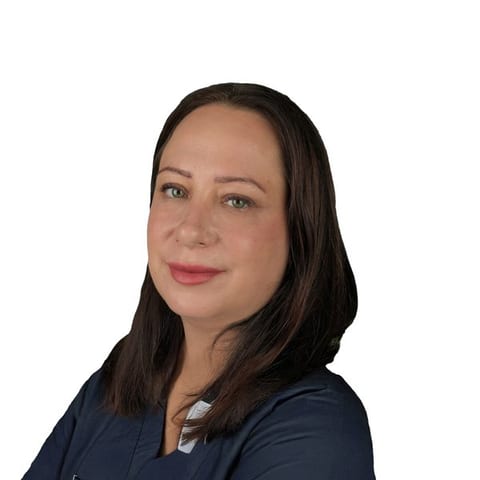
Dr. Gülçin Yıldırım
Orthodontist · Ballıpınar Dental Clinic
- Checkups and cleanings
- Dental implants
- Veneers
- Teeth whitening
- Crowns and bridges
- +5 more
Polyclinic in Muratpaşa, Antalya, treating local and international patients. The team includes an orthodontist, a periodontist, oral surgeons and an endodontist.
Dr. Babaammi Menoubia
Beausourire Cabinet Dentaire
- Clear aligners
- Veneers
- Checkups and cleanings
- Dental implants
- Teeth whitening
- +5 more
Beausourire is a dental practice in Bab Ezzouar, east Algiers, where Dr. Babaammi Menoubia (Doctor of Dental Surgery, 2003) offers clear aligners, ceramic veneers and dental implants alongside routine and emergency care, dentures and whitening. Teeth are scanned with a Medit i500 intraoral scanner, and a dental laser is used for treatments and whitening. Many patients live abroad, notably in France, Germany, Canada and the UK. Dr. Babaammi explains each stage before treatment starts and keeps following patients between visits through WhatsApp photos and video calls.
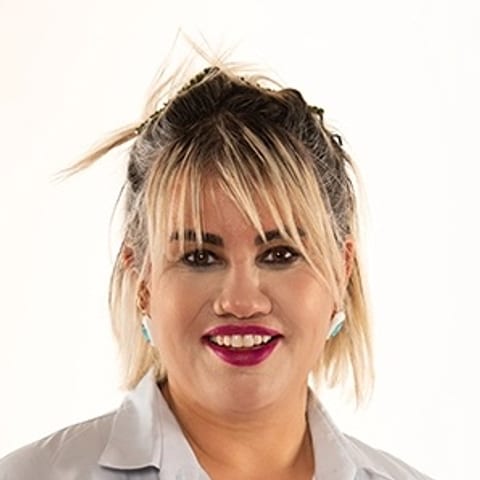
Dt. Güzin Kırsaçlıoğlu
Dental Estetik Center
- Checkups and cleanings
- Dental implants
- Clear aligners
- Veneers
- Teeth whitening
- +7 more
Polyclinic in Çankaya, Ankara, founded in 1993, with dentists in prosthodontics, periodontology, pediatric dentistry and oral surgery.
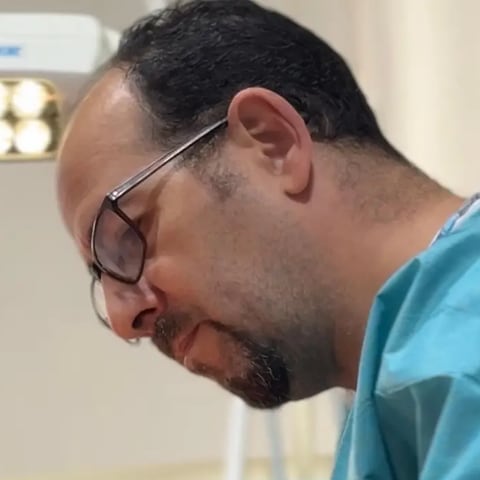
Dr. Samir Kerbi
Cabinet Dentaire Dr. Kerbi Samir
- Dental implants
Practice in Ali Mendjeli, Constantine. Dr. Kerbi trained at the Constantine faculty of dentistry.
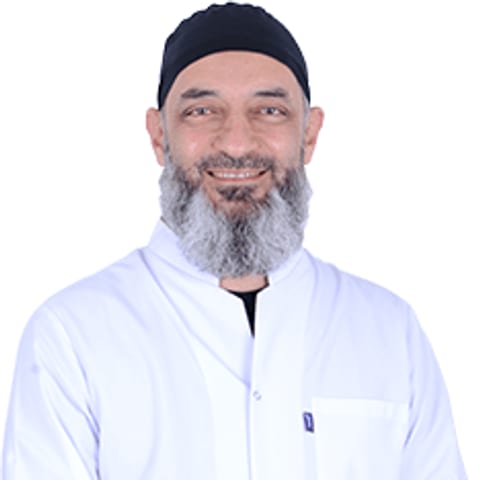
Prof. Dr. Serdar Üşümez
Orthodontist · Dental Plus İstanbul
- Checkups and cleanings
- Dental implants
- Clear aligners
- Braces
- Teeth whitening
- +5 more
Polyclinic in Bakırköy, Istanbul. Its university-trained dentists cover orthodontics, prosthodontics, periodontics, endodontics and pediatric dentistry.
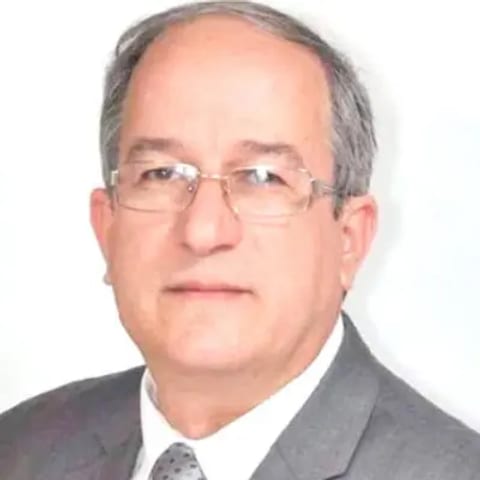
Dr. Hakim Belahcel
Clinique Dentaire Dr. Belahcel
- Dental implants
Clinic in Bordj Menaïel, Boumerdès, with digital impressions taken on site.
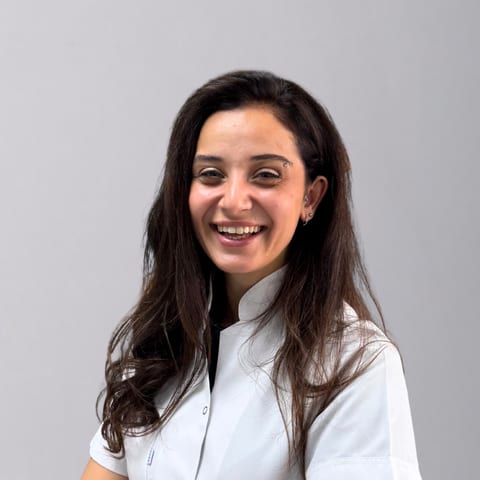
Dr. Gülay Çakır
Prosthodontist · DentaPoint Alsancak
- Dental implants
- Clear aligners
- Braces
- Veneers
- Teeth whitening
- +4 more
Alsancak polyclinic on Şair Eşref Boulevard, Izmir.

Dr. Randa Goufi
Dentonella Dental Clinic
- Dental implants
- Braces
- Cosmetic dentistry
Clinic on Rue des Frères Ferroum in Kouba, Algiers.
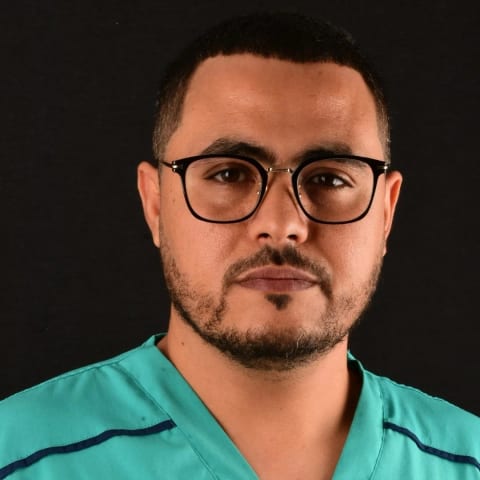
Dr. Noureddine Maache
Zirconia Dental Clinic
- Checkups and cleanings
- Dental implants
- Clear aligners
- Veneers
- Teeth whitening
- +2 more
Clinic in Birkhadem, Algiers, using digital impressions.
General information only. This page is not medical or legal advice, and it does not replace an exam by a licensed dentist. Results vary. If you have severe pain, swelling, fever or bleeding after dental treatment, contact a dentist or get urgent care.