
Dentures
Dentures are removable replacement teeth. Complete dentures replace every tooth in the upper or lower jaw. Partial dentures fill the gaps and clip onto the teeth you still have. Most people need a few weeks to get used to them.
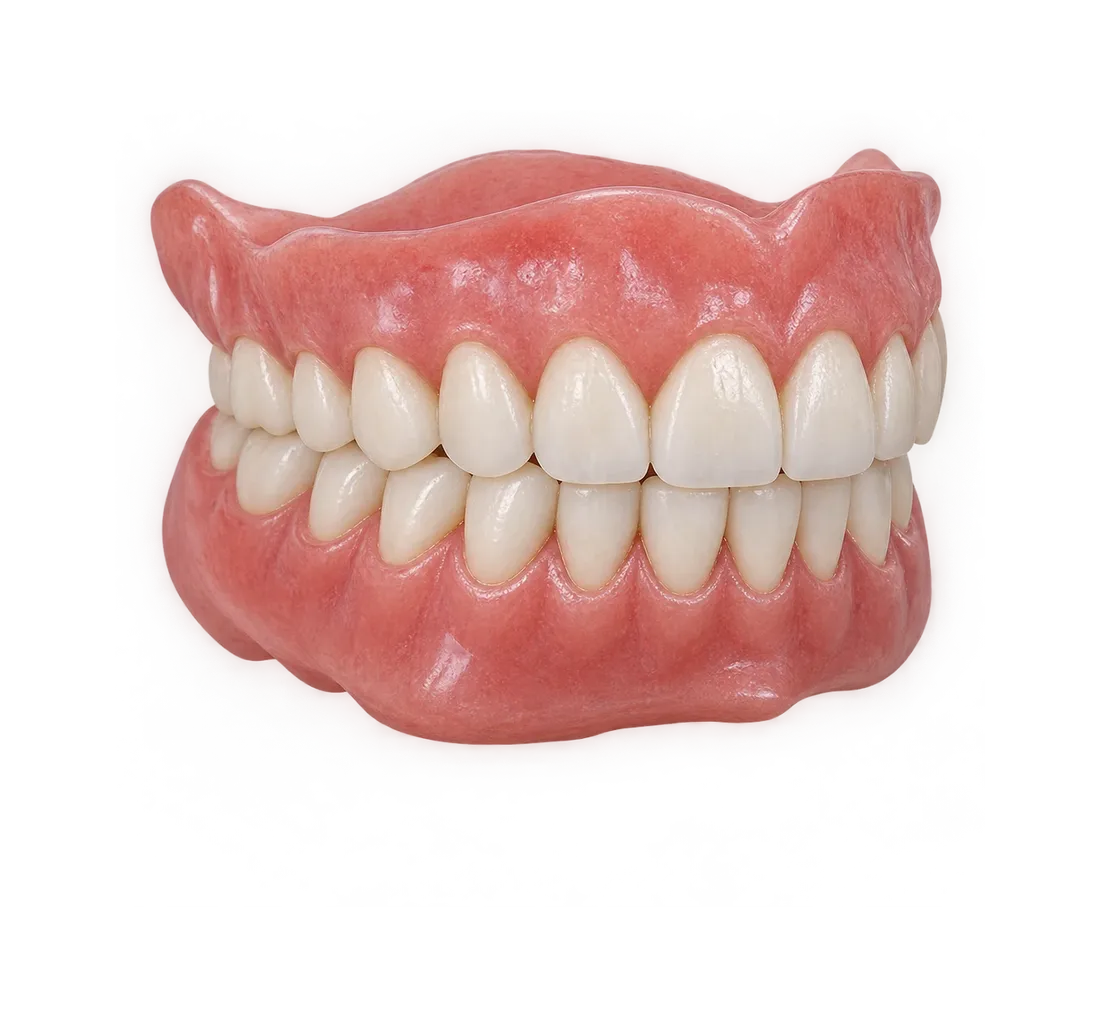
What dentures are
The main types are:
- Complete dentures replace a whole row of teeth in the upper jaw, the lower jaw or both (Cleveland Clinic).
- Partial dentures replace one or more missing teeth. Clasps hook around your remaining natural teeth to keep the denture steady (Cleveland Clinic).
- Immediate dentures go in on the same day the remaining teeth are removed. A conventional denture is made after the gums have healed, which can take several months (ADA).
- Overdentures fit over a few prepared natural teeth or over dental implants (ADA). Some implant-supported dentures are fixed in place and only a dentist can remove them (Cleveland Clinic). Read our implant guide for more.
Who they are for
Dentures are an option for people who have lost some or all of their teeth, or who need the remaining teeth removed. Other ways to replace a missing tooth include a bridge or an implant. Ask your dentist to compare the options for your mouth, including how each one is cleaned and maintained.
What happens
- Exam and plan. The dentist checks your mouth and talks through the types that could suit you.
- Impressions. The dentist takes impressions of your mouth. Often there is a first impression and a final one (Cleveland Clinic).
- Making the denture. A model of your mouth is used to build the denture (Cleveland Clinic). Ask whether you can try it in before it is finished.
- Fitting and adjustments. Getting the right fit usually takes several visits (Cleveland Clinic). Follow-up visits are generally needed after the denture goes in, so the dentist can check and adjust it (ADA).
New dentures can feel awkward at first. It can take weeks, sometimes months, to get used to them (Cleveland Clinic). An immediate denture may need to be relined or remade once the jaw has healed (ADA).
Daily care
- Clean the denture every day by soaking and brushing it with a non-abrasive denture cleanser (ACP guideline).
- Brush your gums, tongue and the roof of your mouth too, including each morning before you put the denture in (ADA).
- When the denture is out of your mouth, keep it in water so it does not warp (ACP guideline).
- Do not wear dentures 24 hours a day. The guideline advises against this to help prevent denture stomatitis, an inflammation of the tissue under the denture (ACP guideline). Ask your dentist when to take yours out.
- If you use an adhesive, use it as directed. The guideline advises avoiding adhesives that contain zinc, as a precaution (ACP guideline).
- See a dentist once a year to check the fit, look for sores and check the bone and gums (ACP guideline).
Risks and side effects
- Early problems. A new denture may feel loose while your cheeks and tongue adapt. Minor soreness and extra saliva are common. Tell your dentist if soreness does not go away (ADA).
- Movement. Many people with traditional dentures say they shift or slip (Cleveland Clinic).
- Changes in fit. The jawbone slowly shrinks after teeth are lost, so the fit changes over time (Cleveland Clinic). Cleveland Clinic suggests a reline every one to two years, or sooner if the fit changes. It puts the average life of a denture at 7 to 10 years (Cleveland Clinic). Your own denture may need work sooner or later than that.
- Damage. Contact your dentist if a denture breaks or stops fitting well (ADA). Do not try to repair it yourself.
What affects the cost
- The type: complete, partial, immediate or implant-supported.
- The materials used for the base, the teeth and any clasps.
- Treatment you need first, such as extractions or gum care.
- How many adjustment visits are included.
- Relines, repairs and a replacement denture in later years.
- What your dental plan covers, and any yearly maximum.
Ask for a written estimate that lists each item separately, with the CDT code for each line (ADA). Ask which follow-up visits and adjustments the price includes.
Questions to ask your dentist
- Which type of denture suits me, and why?
- Would implants help hold the denture in place for me?
- If I need extractions, will I get an immediate denture? When will it need a reline?
- Can I try the denture in before it is finished?
- How many adjustment visits are included in the price?
- When should I take my denture out, and how should I clean and store it?
- What happens if it breaks or stops fitting?
General information only. This guide is not medical advice and does not replace an exam by a licensed dentist. Results vary. If a denture causes sores that do not heal, or you have swelling or a fever, contact a dentist.