
Root canal treatment
A root canal removes infected or inflamed tissue from inside a tooth, cleans the space and seals it. It lets you keep the tooth instead of having it pulled. Most treated teeth then need a filling or a crown.
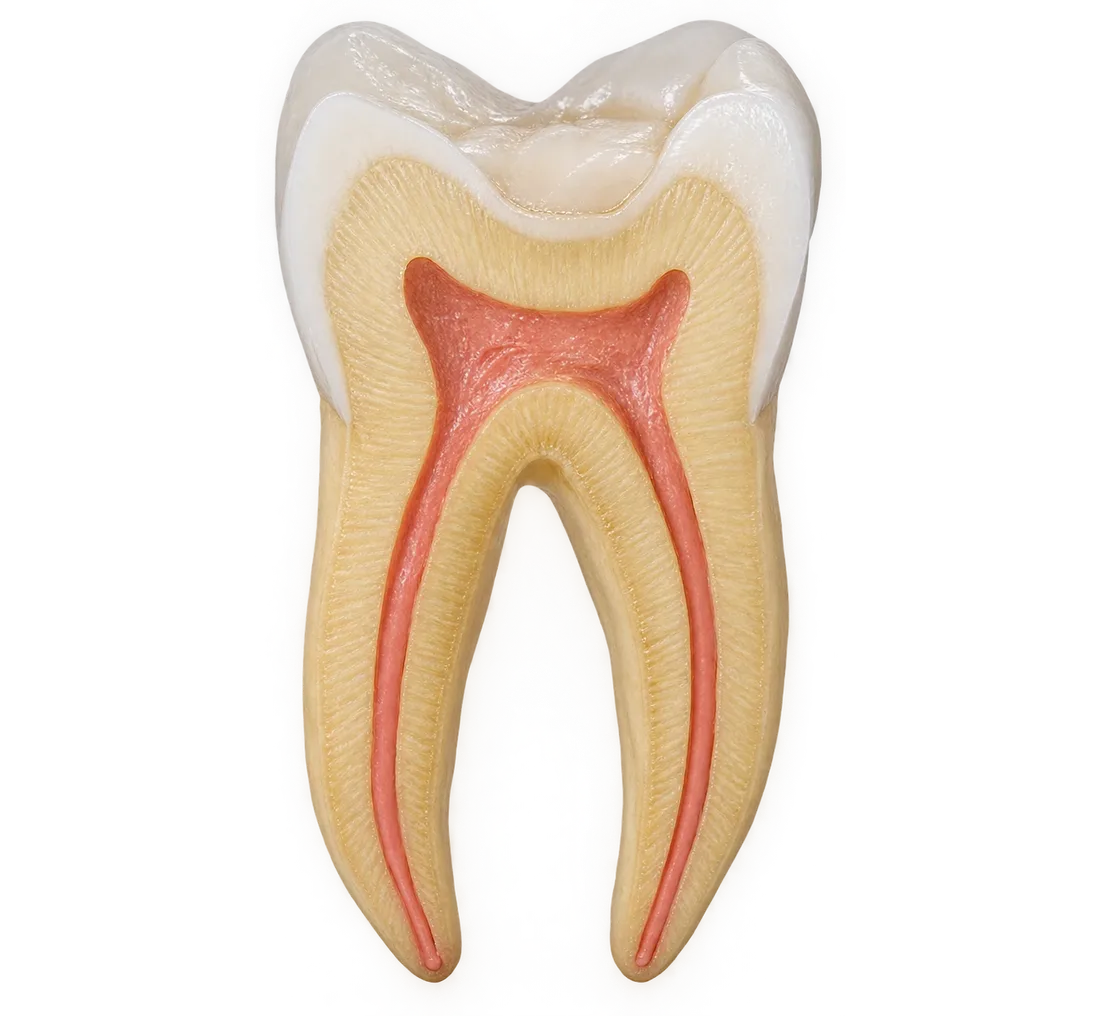
What a root canal is
Inside each tooth is the pulp, soft tissue with nerves and blood vessels. A root canal removes inflamed or infected pulp, cleans and disinfects the inside of the tooth, then fills and seals it (AAE). The aim is to save the tooth instead of removing it (ADA).
The pulp can become inflamed or infected after deep decay, repeated dental work on the tooth, a crack or chip, or an injury, even one that leaves no visible damage (AAE). Without treatment, an abscess can form, and the infection can damage the bone and lead to losing the tooth (ADA).
Signs a tooth may need one
The AAE lists these signs (AAE):
- Severe pain when chewing or biting
- A pimple on the gums
- A chipped or cracked tooth
- Sensitivity to hot or cold that lingers after the hot or cold is gone
- Swollen or tender gums
- Deep decay or darkening of the gums
These signs have other causes too. A dentist needs to examine the tooth and take X-rays to know. Your dentist may refer you to an endodontist, a dentist with advanced training in treating the inside of the tooth (ADA).
What happens
Treatment usually takes one or two visits (ADA, AAE).
- X-rays and numbing. The dentist takes X-rays and numbs the area with a local anesthetic. A thin rubber sheet goes over the tooth to keep it dry (ADA).
- Cleaning. The dentist makes an opening in the top of the tooth, removes the pulp and cleans the canals. Medicine may be placed to kill germs (ADA).
- Filling. The canals are filled with a rubber-like material, and a temporary filling closes the opening (ADA).
- Final restoration. At a later visit, the temporary filling is replaced with a final filling or a crown. A post may be placed in the canal to help hold it (ADA).
Because the area is numbed, the AAE says a root canal is no more painful than a routine procedure such as a filling (AAE). Experiences vary, so ask your dentist what to expect.
Recovery and aftercare
- Numbness usually lasts 2 to 4 hours. Do not eat until it has worn off (AAE).
- The tooth may be sore or sensitive for a few days (ADA, AAE).
- If you are given antibiotics, take them exactly as directed (ADA).
- Go back for the final filling or crown. A temporary filling is not meant to last.
- Brush twice a day with fluoride toothpaste, clean between your teeth daily and keep regular checkups (ADA).
Call your dentist if pain or swelling gets worse instead of better.
Risks and how long treated teeth last
Soreness after treatment is common (AAE). Sometimes a treated tooth does not heal, or it cracks later. A treated tooth can be treated again, or it may need to be removed.
The figures below come from research. They describe groups of patients, not what will happen to you.
- A 2011 study at a UK dental school followed more than 1,600 treated teeth. After four years, about 95% were still in place. The figure was about the same for teeth treated for the first time and teeth treated a second time (Ng 2011).
- The same authors' earlier review of studies found that 86% to 93% of treated teeth were still in place 2 to 10 years later. A crown after treatment was the factor most strongly linked with keeping the tooth (Ng 2010).
- Pain before treatment, diabetes and some other factors were linked with a higher chance of losing the tooth (Ng 2011).
Leaving an infected tooth untreated has risks too. An abscess can spread to the jaw, the blood or other parts of the body, and can become life-threatening (MedlinePlus).
What affects the cost
- Which tooth is treated, and how complex its canals are.
- Whether a general dentist or an endodontist does the work.
- X-rays or scans.
- The final filling or crown, and any post and build-up.
- Whether this is a first treatment or a second one.
- What your dental plan covers, and any yearly maximum.
The AAE says a root canal and restoration usually cost less than removing the tooth and replacing it with an implant or bridge (AAE). Ask for a written estimate that covers the root canal and the final crown or filling, with the CDT code for each line (ADA).
Questions to ask your dentist
- Why does this tooth need a root canal? What else could we do?
- Will you do it, or refer me to an endodontist?
- How many visits will it take?
- Will the tooth need a crown afterward? When should that be done?
- What should I do if the pain gets worse after treatment?
- What does the estimate include, and what will my plan pay?
General information only. This guide is not medical advice and does not replace an exam by a licensed dentist. Results vary. If you have facial swelling, a fever, or trouble breathing or swallowing, read our dental emergency guide and get care right away.