
Clear aligners
Clear aligners are a series of removable plastic trays, each one moving your teeth slightly. They only work while you wear them: the FDA says at least 20 hours a day. A dentist or orthodontist should examine you before treatment and check on you during it.
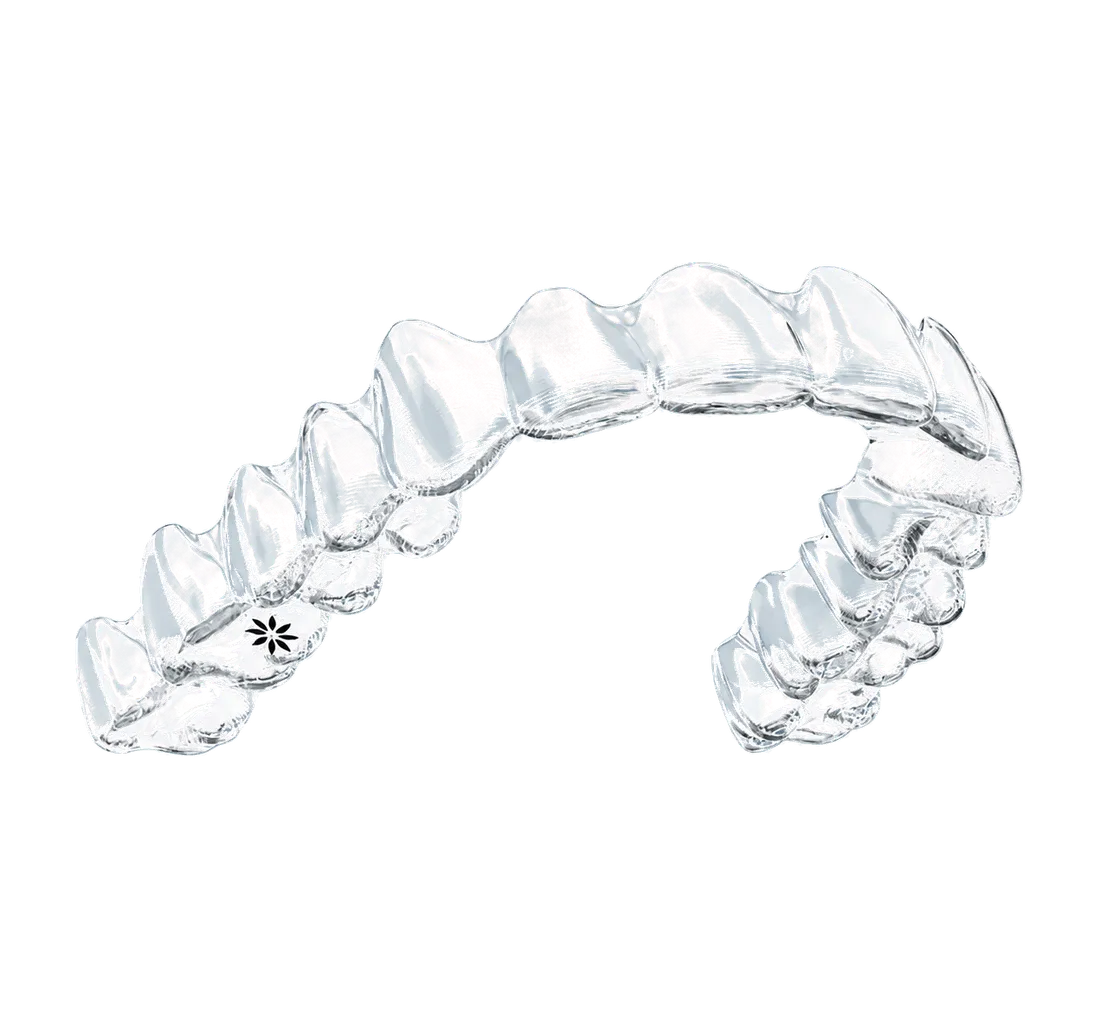
What clear aligners are
Each custom-made tray is shaped a little differently from the one before. Worn in order, they move teeth step by step toward a planned position (FDA). Orthodontists sometimes call them invisible braces (Cleveland Clinic).
In the United States, clear aligners are prescription devices. The FDA says they are only safe to use under the supervision of a licensed practitioner (FDA). That means a dentist or orthodontist should examine you, plan the treatment and check your progress.
How they move teeth
- The dentist takes a digital scan or impressions of your teeth, along with photos and X-rays.
- Software shows how each tooth should move, stage by stage. This plan is a goal, not a promise. Teeth do not always move exactly as the plan shows.
- Small tooth-colored bumps called attachments may be bonded to some teeth. They help the aligners grip and move the teeth (Cleveland Clinic).
- You switch to the next tray on a set schedule, generally about every two weeks (Cleveland Clinic). Follow the schedule your provider gives you.
Who they suit
Clear aligners can treat some types of mild to moderate crowding, spacing and bite problems. They are not an option for everyone (Cleveland Clinic). A dentist or orthodontist decides after an exam.
A 2019 systematic review compared aligners with braces. It found both were effective in treating misaligned teeth. Aligners did well at moving teeth in small segments, and treatment was shorter on average. But aligners were less effective than braces at making the upper and lower teeth meet properly, controlling the angle of the roots, widening the arch and holding results afterwards (Ke 2019). The review included only eight studies, so treat these findings as a guide, not a rule.
| Topic | Clear aligners | Braces |
|---|---|---|
| Look | Clear plastic trays. Attachments, if used, are tooth-colored. | Brackets and wires on the teeth. Ceramic brackets are less noticeable than metal. |
| Eating and cleaning | You take the trays out to eat and to brush and floss. | Fixed in place. You avoid some hard and sticky foods and clean around brackets. |
| Your part | They work only while you wear them, at least 20 hours a day (FDA). | They work all the time. You still need to keep your appointments and clean well. |
| Complex movements | Less effective at some movements in the 2019 review (Ke 2019). | Often preferred when teeth need large or precise movements. |
When another treatment may fit better
- Your bite needs large or precise tooth movements. Your dentist may suggest braces instead.
- You have cavities or gum disease. These need treatment before any teeth are moved (Cleveland Clinic).
- You do not think you can wear trays for most of the day, every day.
- Your main concern is the color or shape of your teeth rather than their position. Whitening, bonding or veneers may be options to ask about.
Our guide to braces explains the other main way to straighten teeth.
Why an in-person exam comes first
Some companies sell aligners directly to consumers, using a mail-in impression kit or a scan and remote check-ins in place of office visits. The FDA says it has not authorized clear aligners sold directly to consumers without a prescription. It advises an in-person evaluation by a dentist or orthodontist before you start, and periodic in-person visits during treatment to check that your teeth are moving safely and as planned (FDA).
ADA News reported in October 2026 that the FDA had received reports of tooth or jaw soreness, bite problems, worsening alignment and new gaps between teeth among people using unauthorized direct-to-consumer aligners. The FDA said periodic in-person visits can help reduce these risks (ADA News).
An exam with X-rays before treatment lets the dentist:
- check the roots of your teeth and the bone around them, which a scan of the tooth surfaces cannot show;
- find cavities and gum disease, which need treatment before teeth are moved (Cleveland Clinic);
- check existing crowns, fillings and implants, which aligners can loosen (FDA);
- look at how your jaws and bite fit together, and whether aligners can do what you want.
The FDA also warns that "FDA-registered" only means a company has listed its facility and products with the agency. It does not mean the FDA reviewed the product. Ask your provider whether the aligner system they use has been cleared by the FDA (FDA).
The steps and how long it takes
-
Exam, X-rays and records
The dentist reviews your health history, examines your teeth, gums and bite, and takes X-rays, photos and a scan or impressions.
-
Treatment plan and quote
You see the planned tooth movement and the number of trays. You should get a written plan, an estimate of how long treatment will take and an itemized quote.
-
Fitting and attachments
The dentist bonds any attachments to your teeth and fits the first trays. Some plans also remove a small amount of enamel between teeth to make space. Ask whether yours does, and why.
-
Wearing and changing trays
You wear each set for the time your provider sets, generally about two weeks (Cleveland Clinic), then move to the next.
-
Check-ups
Regular visits let the dentist check that teeth are moving as planned (FDA). Ask how often you will be seen in person.
-
Refinements and retainers
If teeth fall behind the plan, you may need extra trays. When active treatment ends, you move to a retainer.
| Situation | What sources say |
|---|---|
| A few slightly crooked teeth | Up to about nine months (Cleveland Clinic). |
| Orthodontic treatment in general | Less than a year for some people, two years or longer for others (Cleveland Clinic). |
| Compared with braces | About six months shorter on average in the studies pooled by a 2019 review (Ke 2019). Your case may differ. |
| Refinements | Add time. Ask your dentist how often extra trays are needed in cases like yours. |
| Retainers | Continue after active treatment ends. See retainers and relapse. |
Wear time and daily care
Aligners only move teeth while they are in your mouth. The FDA advises wearing them at least 20 hours a day (FDA). Cleveland Clinic says 22 to 23 hours a day, taking them out only for meals and to brush and floss (Cleveland Clinic). Missed hours can slow treatment or stop teeth from reaching the planned position.
- Take the trays out to eat. Ask your dentist what you can drink with them in.
- Brush and floss before you put the trays back. Poor cleaning around orthodontic appliances raises the risk of cavities (Cleveland Clinic).
- Clean the trays as your dentist shows you, and keep them in their case when they are out of your mouth.
- Keep track of your trays. Aligners can be lost or damaged (FDA). Ask what a replacement costs before you start.
- Expect some pressure or soreness after a new tray. It usually eases within a few days. Contact your provider about sharp pain, pain that lasts more than a few days, gums that bleed or swell, or a tray that feels loose or does not fit (Cleveland Clinic).
Refinements, retainers and relapse
Refinements
Teeth do not always follow the computer plan, and aligners are less effective than braces at some movements (Ke 2019). When teeth fall behind, the dentist may take a new scan and order extra trays. These are often called refinements. Ask how many refinements your fee includes, and for how long.
Retainers
Once teeth have moved, they can drift back toward where they started. This is called relapse. Your dentist or orthodontist may recommend a retainer to keep your teeth in place (FDA). If you stop wearing it, your teeth could drift back over time (Cleveland Clinic).
Instructions vary. Cleveland Clinic describes a common pattern: wearing the retainer day and night for at least four to six months, then at night with no set end date (Cleveland Clinic). Retainers can be removable clear trays, removable plastic-and-wire retainers, or a thin wire bonded behind the teeth. Removable retainers wear out and need replacing, so ask what a new set costs.
Risks and side effects
- Soreness and pressure, usually for a short time after each new tray (Cleveland Clinic).
- Cavities and gum inflammation if teeth and trays are not kept clean (Cleveland Clinic).
- Existing crowns, fillings and implants can loosen or come off (FDA).
- Swelling, and cuts or scrapes inside the mouth (FDA).
- Tooth or jaw soreness, bite problems, new gaps and worse alignment. The FDA has received reports of these from people using unauthorized direct-to-consumer aligners, and says in-person visits can help reduce the risk (ADA News).
- Root resorption, a shortening of the tooth roots that can happen with orthodontic treatment. A 2025 review of 10 studies found it was generally smaller at the front teeth with aligners than with braces, but it still happens (Darvizeh 2025).
- Relapse, if retainers are not worn as advised (Cleveland Clinic).
- A final result that differs from the computer plan.
If you have a problem with an aligner, tell your dentist. You can also report it to the FDA through its MedWatch program (FDA).
Orthodontist or general dentist
Both orthodontists and general dentists provide clear aligner treatment. The FDA's advice refers to an evaluation by a dentist or orthodontist (FDA).
- Orthodontist. Orthodontics and dentofacial orthopedics is one of 12 dental specialties recognized in the United States (National Commission). Orthodontists complete two to three years of extra training after dental school (Cleveland Clinic).
- General dentist. Many general dentists offer aligners. Ask how many aligner cases they treat each year, and what they do if a case does not go as planned.
- Complex bites. If your bite is complex, or a dentist is unsure aligners can reach your goal, an orthodontist's opinion can help you decide.
- License. Look up any dentist on your state dental board's license search. The ADA keeps a directory of state boards (ADA).
What drives the cost
Compare written, itemized quotes, not headline prices.
- How much your teeth need to move, and how many trays that takes.
- How long treatment lasts, and how many office visits are included.
- Whether refinements are included, and how many.
- Records such as X-rays, photos and scans.
- Attachments and any enamel reshaping between teeth.
- Other dental work needed first, such as fillings or gum treatment.
- Retainers after treatment, and replacements.
- Fees for lost or broken trays.
- Local costs where the practice is.
Itemized quote checklist
Ask for a written, itemized estimate before you agree to treatment. It should cover each of these lines, or say that it does not apply to you.
| Item | What the quote should show |
|---|---|
| Exam and records | X-rays, photos and scans, and whether the fee counts toward treatment. |
| Aligners | The aligner system, the number of trays and the expected length of treatment. |
| Office visits | How many in-person check-ups are included. |
| Refinements | How many extra rounds of trays are included, and until when. |
| Attachments and reshaping | Whether they are planned, and any separate fee. |
| Retainers | The type, how many sets are included, and the price of a replacement. |
| Lost or broken trays | What a replacement costs. |
| If treatment stops | The refund terms if you stop, move away or switch to braces. |
| Payment terms | The deposit, the payment schedule and any interest. |
Insurance, HSA/FSA and financing
Dental insurance
Orthodontic coverage varies from plan to plan. Before you start, ask your plan:
- Does it cover orthodontic treatment for adults, or only for children?
- Does it cover aligners as well as braces?
- Is there a separate maximum for orthodontic treatment, and how is it paid out?
- Is there a waiting period?
HSA and FSA
IRS Publication 502 lists braces among the dental costs that count as medical expenses. It excludes teeth whitening (IRS Publication 502). An HSA or health FSA can generally pay for qualifying medical expenses, within each plan's rules (IRS Publication 969). Check with your plan administrator that your aligner treatment qualifies before you pay.
Financing
If a practice offers a payment plan, a medical credit card or a loan, read the APR, the promotional period and the total you will repay. With a deferred-interest offer, if you have not paid the full balance by the end of the promotional period, you are charged interest back to the date of purchase (CFPB). Vwellny does not offer or arrange financing.
Questions to ask
- Are aligners a good fit for my teeth and bite, or would braces or another treatment work better?
- Will you examine me in person and take X-rays before we start?
- Who plans my treatment, and who checks my progress?
- How often will I see you in person?
- How many trays will I need, and how long should treatment take?
- Will I need attachments or any enamel reshaping?
- Which aligner system do you use, and has it been cleared by the FDA?
- How many refinements are included, and until when?
- What happens if I lose or break a tray?
- What retainer will I need, how long should I wear it, and what does a replacement cost?
- What does the quote include, and what could add to it?
- Can I have copies of my X-rays, scans and treatment plan?
Under HIPAA, you generally have the right to a copy of your records from a dental practice covered by the law, for a limited, cost-based fee (HHS).
General information only. This guide is not medical, dental, tax or financial advice, and it does not replace an exam by a licensed dentist or orthodontist. Results vary. If you have severe pain, swelling or a broken appliance that cuts your mouth, contact your dentist.